
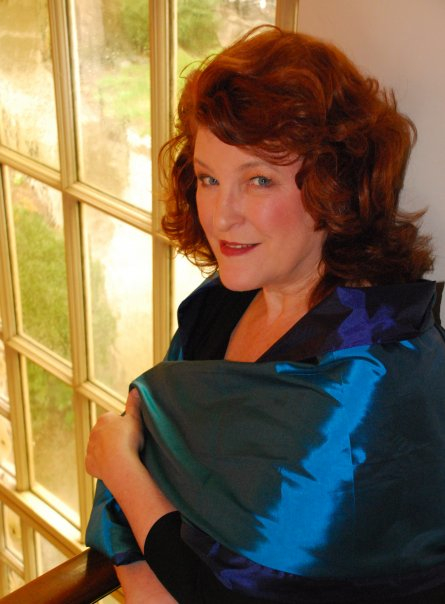
This Saturday, March 29 at 3:00 p.m. at Elm Park United Methodist Church in Scranton, our friend and colleague Dr. Sarah Davies will give a lecture on Bach’s B-minor Mass for the Bach Festival. An organ recital performed by Trent Johnson will follow at 4:00 p.m. The Arcadia Chorale will perform the B-Minor Mass on Sunday, March 30 at 3:00 p.m. at Covenant Presbyterian Church in Scranton.
Here’s more about the program:
The Mass in B-minor was the last work Johann Sebastian Bach composed and compiled, finished in late 1749 just months before his death in 1750. It was never performed complete in his lifetime but was announced at the promise of its publication in 1818 as “The Greatest Musical Art Work of All Time and All People.”
This lecture will explore the ways in which Bach created a 27-section masterpiece, a Missa tota, on the five Ordinary texts of the Mass. Near the end of his life, the composer assembled his 1733 Kyrie and Gloria (a Missa brevis) written for the Dresden court, reworked a Leipzig Sanctus from 1724, and repurposed the best of his cantatas with more original music for the Credo and Agnus Dei.
What Bach’s original intention or destination was for the B-minor Mass is not clear, but it seems he was in fact writing “for his neighbor” as his Christian duty, creating a Vermächtnis, or legacy. Bach must have been well aware of his own genius, and it was incumbent upon him, given a gift from God, to share it with the world. Bach scholar Christoph Wollf has described the Mass as a “summary,” with “its variety of styles, compositional devices, range of sonorities and high technical polish,” which “preserved the musical and artistic creed of its creator for posterity.”
Sarah Davies, organist and musicologist with a PhD from New York University, is an independent scholar and performer now living in Miami. She has given papers on a range of Renaissance German and Swiss lute and organ topics at international and American musicology and interdisciplinary conferences dealing with theology, German studies, Reformation studies, iconography, iconoclasm, organology and the devil.
For the past twenty years, she has been a frequent lecturer for the series Music at St. Luke’s (Choir of St. Luke’s in the Fields) in New York City, covering a wide variety of early vocal repertoire, and has also been a regular lecturer for the early music vocal ensemble Polyhymnia. Her ongoing work on the organ sermon, the organ as a sign of confessional identity and the organ as an object of iconoclasm has been published by the University of Regensburg (2022) the University of Leuven (2019) and the Liszt Academy, Budapest (2003). Her recent focus has been on forgotten and understudied 17th-century German organ tablatures in the United States.
As a performer, Sarah has been heard in recital on early and historic organs in Switzerland, Germany and France, as well as on the earliest organs made in America (Tannenberg and Doll). She was the organ soloist for the 10th Anniversary of the NEPA Bach Festival, performing Bach’s Clavierũbung III, and later performed the Schübler Chorales for the Festival. At the Boston Early Music Festival, the Holland Festival and the Dufay Festival in Boston, she was featured in the 15th-century repertoire of the Buxheimer Orgelbuch.
Sarah’s first encounter with Bach and the B-minor Mass was as a newborn, when her mother, the soprano Lila Sprunger Miller, to whose memory this lecture is dedicated, was playing the recording and preparing the solos for performances in New York. Hearing it again at the first Philadelphia Bach Festival in 1962 triggered remembrance and, as an organist, a lifelong commitment to the composer.
 Pennsylvania Northeast Chapter